
 +84 91 322 2269
As early morning mist blankets the slopes of Tay Con Linh, Dao ethnic villagers in the highlands of Ha Giang begin their daily journey into the mountains to harvest Shan Tuyet tea. At elevations above 2,000 meters, surrounded by pristine forests and cool year-round climate, ancient tea trees reach their most productive season.
More than just a specialty agricultural product, Shan Tuyet tea from Tay Con Linh carries deep cultural significance, supports sustainable livelihoods, and reflects the resilience and aspirations of northern Vietnam’s highland communities.
Ancient Tea Trees on the “Roof of the Northeast”
Tay Con Linh, often referred to as the “Roof of Northeast Vietnam,” boasts a unique ecosystem ideal for Shan Tuyet tea. The ancient tea trees here are hundreds of years old, with moss-covered trunks, wide canopies, and natural growth on steep mountain terrain.
A distinctive feature of Shan Tuyet tea is the fine white fuzz covering its young buds, resembling snow—hence the name “Shan Tuyet” (Snow Mountain tea). Nourished by mountain mist and pure air, the tea offers a delicate aroma, a light astringency, and a long, naturally sweet aftertaste. It is widely regarded as one of Vietnam’s finest ancient teas.
Harvesting Begins at Dawn
To ensure the highest quality, harvesting begins early in the morning while dew still clings to the buds. The process is entirely manual due to the height of the trees and the steep terrain.
Harvesters often climb the trees or use wooden ladders to reach the best buds. Only the finest “one bud and two leaves” are selected for premium tea production.
In communes like Phuong Tien, many households manage thousands of ancient tea trees. Some families harvest up to one ton of fresh leaves annually, generating stable incomes thanks to the high market value of Shan Tuyet tea.
Shan Tuyet Tea – The “Green Gold” of Ha Giang
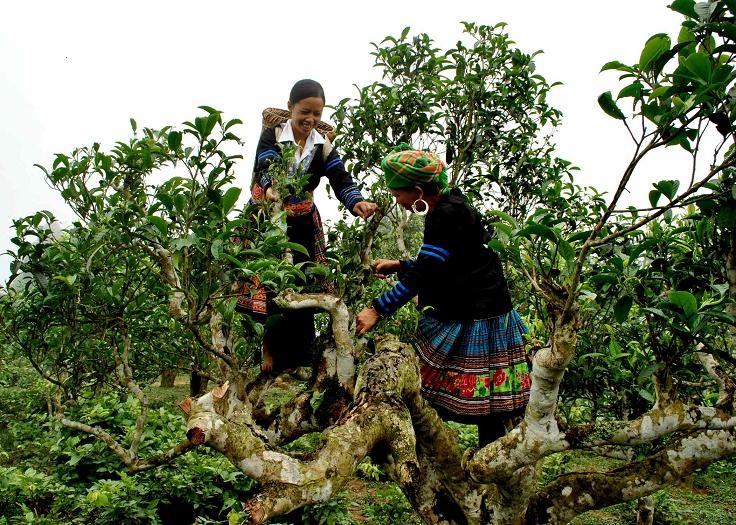
Over the years, Shan Tuyet tea has become a key economic crop, helping improve livelihoods in remote mountainous areas. Ha Giang is now one of Vietnam’s major tea-producing regions, with famous ancient tea zones such as Cao Bo, Hoang Su Phi, Xin Man, and Tay Con Linh.
Beyond selling fresh leaves, locals increasingly invest in deep processing—producing green tea, black tea, white tea, and fermented varieties—to enhance value. Premium ancient Shan Tuyet teas can reach prices of several million VND per kilogram.
Many Shan Tuyet tea products have also achieved OCOP certification and international organic standards, opening doors to global export markets.
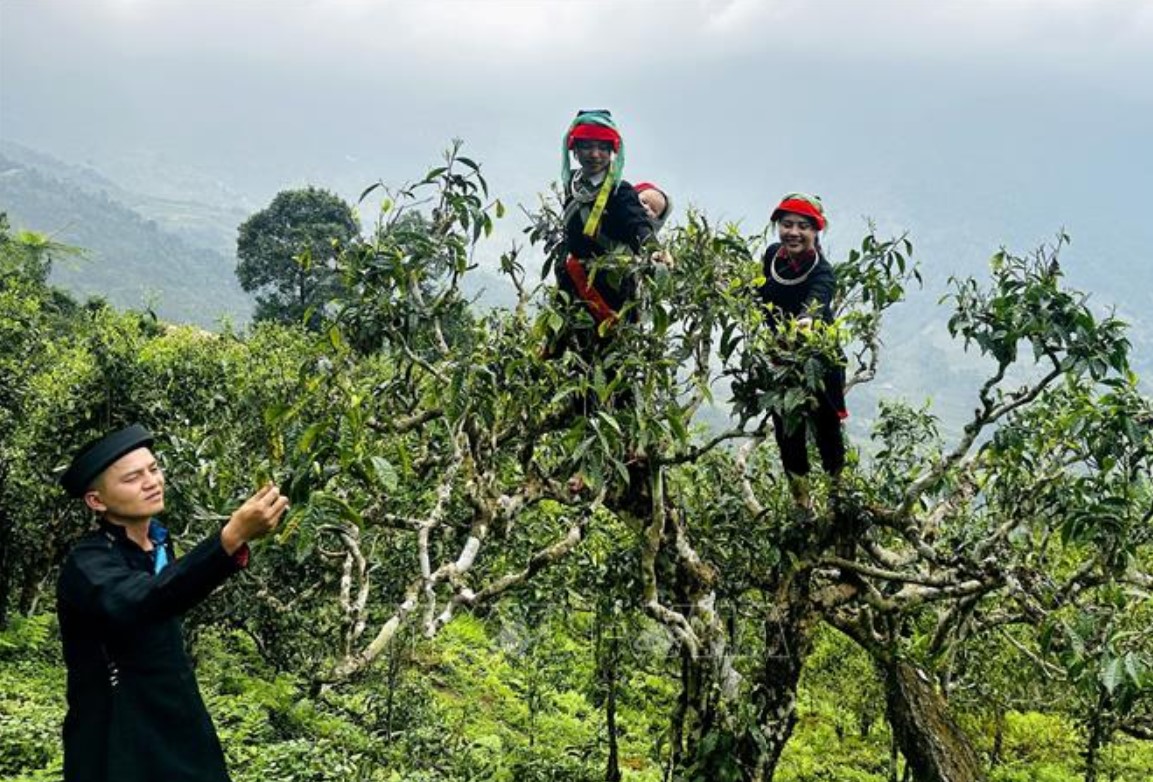
The Shan Tuyet harvest season is not only an economic activity but also a unique tourism attraction. Visitors to Tay Con Linh can experience tea picking, traditional pan-firing techniques, tea tasting, and local cultural life.
The sight of ancient tea trees hidden in mist, the sound of tea roasting over open fires, and the aroma of fresh tea create an unforgettable highland experience.
This model—combining agriculture, cultural preservation, and community-based tourism—is paving the way for sustainable development in mountainous regions.
Preserving a Valuable Natural and Cultural Heritage
Beyond its economic importance, ancient Shan Tuyet tea is considered a valuable natural and cultural heritage. Many tea trees in Ha Giang have been recognized as Vietnam Heritage Trees.
Local authorities and cooperatives are working to conserve ancient tea genetics, develop clean production areas, and preserve traditional processing methods of ethnic communities.
In an increasingly modern world, the Shan Tuyet tea harvest on Tay Con Linh remains a symbol of harmony between humans and nature—where each tea bud represents the enduring spirit of the mountains.